September 25, 2023

Accounting and Auditing: SEC Finally Issues Long Overdue Rules Requiring Extraction Companies to Report Payments to Governmental Entities for Resource Development


By Don Carpenter, MSAcc/CPA

After two previously unsuccessful attempts to promulgate reporting requirements for extraction companies laid out in Dodd-Frank, the SEC has issued rules that require disclosure of payments made to commercially develop oil, natural gas or other minerals. After a first attempt was vacated by a U.S. District Court and a second by a joint resolution of Congress, the third attempt may just be the charm.

The requirement in the Dodd-Frank Act was enacted to address perceived corruption in the extractive industries. It has long asserted that payments made to governmental entities, especially in less-developed countries, are routinely misappropriated by the ruling elite and become little more than thinly veiled bribes. The rule was intended to bring accountability through transparency.

But even this latest version is not without its critics. Two SEC commissioners issued separate dissenting opinions, with one of those opinions claiming the new rules fail to meet the intent of Dodd-Frank. Industry watchdogs also assert that the disclosure requirements fall well short of similar reporting requirements of other developed countries.

Since the reporting requirements are under the auspices of the SEC, they apply only to registrants. Private companies are not required to make similar disclosures, opening a loophole for projects intent on avoiding disclosure. Further, the disclosures apply only to reporting entities involved in the commercial “extraction” or “processing” of natural resources. Companies providing equipment such as offshore drilling platforms or services such as geological support would not be included in the requirements. Registrants are required to include payments made by any “controlled” entity that follows the GAAP or IFRS standards of entities requiring full consolidation.

Disclosure must be made at the project level. But the definition of “project” in these most recent rules has been the subject of some criticism due to its failure to enhance the stated goal of transparency. Earlier versions required disclosure at a granular level determined by individual contract, license, lease or concession.

The new rules allow for significant aggregation of payments. Reporting is determined at a major subnational governmental jurisdiction by type of resource and method of extraction. Under this definition of a project, payments made to a national government for the extraction of petroleum could be reported in one lump sum, although they may cover multiple distinct contracts.

Payments that qualify for reporting are broadly defined to include not only the standard rents, royalties, taxes and lease payments but also dividends and payments for infrastructure. In addition, any community and social responsibility (CSR) expenditures fall within the definition of reportable payments. Payments-in-kind from production are also included. Payments of less than $100,000 to a foreign or federal government are excluded as de minimis; however, a series of related payments are aggregated for purposes of the de minimis test.

Reporting is not required where it would conflict with foreign law or terms of pre-existing contracts. Although the SEC did not specifically agree with the conclusion, the background discussion of the new rules noted that one commentor stated that Qatar and China prohibit such disclosure. It was also noted that similar Canadian and EU disclosure requirements do not have a similar conflict exemption. The rules also allow reporting entities to apply for specific exemptions on a case-by-case basis.

Smaller reporting companies and emerging growth companies are exempt from the reporting requirements. Likewise, companies are given a one-year grace period for reporting after completing an initial public offering (IPO).

Qualified payments will be reported on Form SD, which will be modified to provide for such reporting. Form SD is an SEC form already in use to satisfy special disclosure requirements implemented under Dodd-Frank relating to conflict minerals contained in products of reporting companies. The filing must be on EDGAR and available in XBRL format to allow readers to extract and analyze the data.

In a rather unusual step, the SEC also determined that the required information is being “furnished” to the Commission rather than being “filed.” The distinction could have significant implications because information “filed” with the Commission is subject to personal liability for any false or misleading statements of material fact under Sec. 18 of the Exchange Act.

This limitation of liability arguably could have significant ramifications regarding the effectiveness of the reporting requirement. The SEC justified this limitation on the basis that the disclosures are not motivated as much to protect investors as to increase accountability of governments for proceeds they receive for natural resources.

The new requirements were published in the Federal Register on March 16, 2021, and became effective 60 days thereafter. However, the first Form SD is due within 270 days of the reporting entities’ fiscal year end. This means that for a calendar year registrant, the first report is due September 30, 2024.

About the Author: Don Carpenter is clinical professor of accounting at Baylor University. Contact him at Don_Carpenter@baylor.edu.

  • Workforce Development

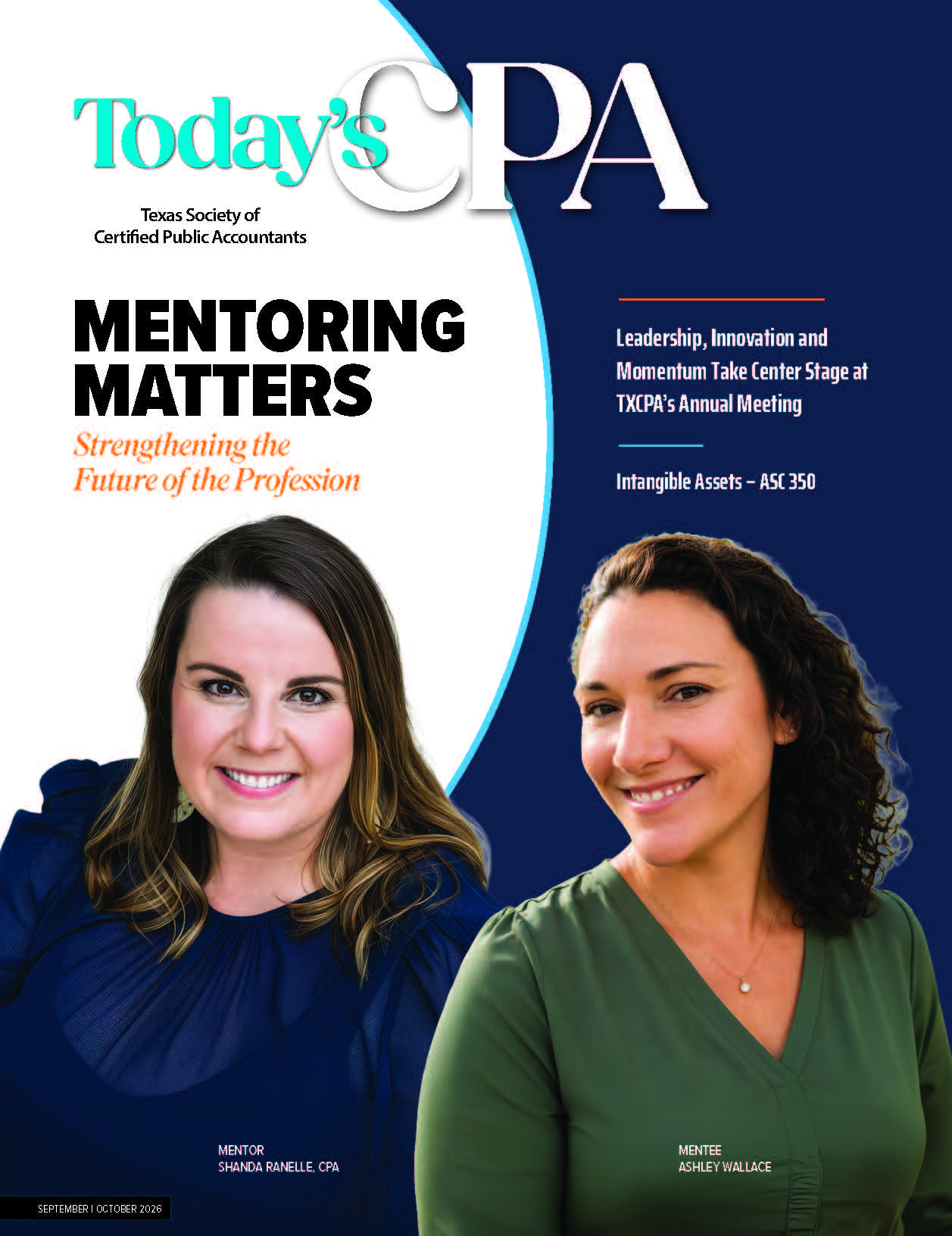
    Mentoring Matters: Strengthening the Future of the Profession

    Mentoring is a cornerstone of the accounting profession. From supporting students and CPA candidates to accelerating the growth of experienced professionals, mentoring strengthens confidence, preserves institutional knowledge and prepares future leaders. TXCPA's Mentor Match program is designed to help members build meaningful professional relationships that support their career growth and development.
    View Article
  • CPE: Intangible Assets – ASC 350

    FASB’s recent targeted GAAP improvements address the accounting and reporting of internally developed software. ASU 2025‑06 replaces development‑stage rules for internal‑use software with a “probable‑to‑complete” capitalization threshold.
    View Article
    IPR&D
  • volunteer leadership

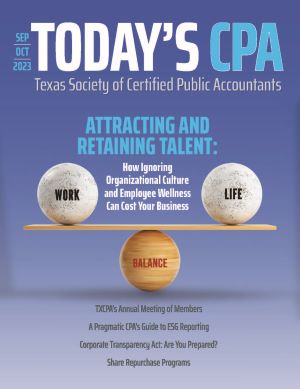
    Leadership, Innovation and Momentum Take Center Stage at TXCPA's Annual Meeting

    TXCPA’s 2026 Annual Meeting brought more than 200 leaders together to celebrate organizational achievements, discuss emerging trends and shape the future of the organization. As the organization enters the final year of its Strategic Plan, the meeting emphasized momentum, collaboration and continued involvement in TXCPA and the accounting profession.
    View Article
  • Expanding the CPA Pipeline: An Important Joint Initiative for CPA Firms and K-12 Schools

    CPA firms, universities and professional organizations are using coordinated efforts to expand the future CPA talent pipeline by reaching students much earlier in the K‑12 system. Because many students choose career pathways as early as 8th grade, the authors emphasize shifting outreach toward freshmen and sophomores already inclined toward business studies.
    View Article
    TXCPA Accounting Opportunities Month
  • Workforce Development

    Mentorship, Momentum and the Future of the Profession

    Strong connections are essential to the future of the CPA profession. This CEO's Message highlights the power of mentorship, TXCPA’s efforts to strengthen the accounting pipeline, and the many ways members, volunteers and chapters are helping build opportunities for the next generation of CPAs.
    View Article
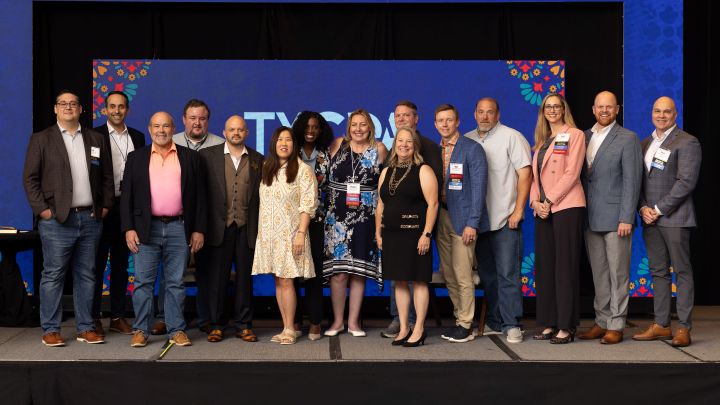
  • Outstanding Chapter Awards Recognize Achievements in Leadership and Service

    TXCPA’s Outstanding Chapter Awards recognize small and medium-sized chapters for excellence in leadership, member service, innovation and community involvement. The 2025-26 recipients, TXCPA Rio Grande Valley and TXCPA East Texas, were honored for their strong student outreach initiatives, professional development opportunities, scholarship fundraising, member engagement and community service.
    View Article
    volunteer leadership
  • Workforce Development

    Beyond Tax and Audit: Shedding Light on Alternative Career Pathways

    Accounting offers far more career opportunities than traditional tax, audit and financial reporting roles. By introducing students to the diverse ways accounting skills can be applied, educators and practitioners can help the next generation of CPAs see the many possibilities an accounting career can offer.
    View Article
  • What’s Happening Around Texas - September-October 2026

    TXCPA chapters across Texas are strengthening connections through student engagement events, legislative conversations, member appreciation gatherings, and strategic planning sessions. From Corpus Christi’s student bowling mixer and to Southeast Texas’ celebration with Lamar University to El Paso's and San Antonio’s focused planning meetings and Victoria’s community‑building event, each chapter is fostering momentum, collaboration and professional growth.
    View Article
    TXCPA Chapters
  • Tenure

    Is Accounting Academia Still a Good Career Option for CPAs? An Updated Perspective

    Is accounting academia still an attractive career path for CPAs? Although demand for accounting Ph.D. graduates has declined despite earlier predictions of faculty shortages, accounting professors continue to enjoy strong compensation, work/life balance, tenure stability and summer flexibility.
    View Article
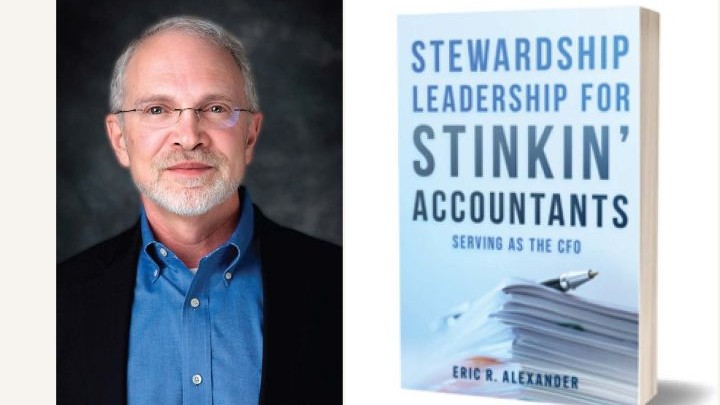
  • Spotlight Article: Leading Beyond the Numbers

    Eric R. Alexander discusses the lessons behind his book “Stewardship Leadership for Stinkin' Accountants: Serving as the CFO” and how a servant mindset, wisdom and relationships create a lasting impact. He explores why trust, accountability and communication are essential to effective financial leadership, especially as AI transforms the profession.
    View Article
    Strategic Planning
  • Sustainability reporting

    Assessing Materiality of ESG Risks: Guidance for CPAs

    This article explains how CPAs can assess and disclose material environmental, social and governance (ESG) risks that may affect a company’s financial position, operations and stakeholders. The concept of double materiality is introduced, which considers both the financial impact of ESG risks on a company and the company’s impact on society and the environment.
    View Article
  • PCC Addresses Priority Private Company Issues in Q2

    This update summarizes the Private Company Council (PCC) activities for the second quarter of 2026. During its June meeting, the council prioritized improving financial disclosures for Employee Stock Ownership Plans (ESOPs) and targeted lease accounting simplifications for private companies, and discussed FASB's decision to add a project on subjective acceleration clauses and debt default disclosures.
    View Article
    Private Company Council
  • volunteer leadership

    Leading the Way: TXCPA Thanks Our 2026-2027 Faculty and Student Ambassadors

    TXCPA celebrates and thanks our 2026–2027 Faculty and Student Ambassadors, whose leadership and enthusiasm bring our programs, resources and opportunities directly to campuses across Texas. Their commitment strengthens our connection to future professionals and fuels the growth of the CPA pipeline statewide.
    View Article
  • Profitable Is Not the Same as Valuable

    A profitable business is not necessarily a valuable or transferable one, as enterprise value depends on organizational architecture rather than dependence on the owner’s involvement. The central message: profitable operations generate income, but only well‑structured businesses build equity that can be sold, transferred or relied upon for retirement.
    View Article
    valuation
  • Workforce Development

    A New Era for CPA Licensure in Texas – and a Look Ahead

    Texas has entered a new phase of CPA licensure with the implementation of Senate Bill 262 on August 1, 2026, creating an alternative pathway that allows candidates to qualify with 120 hours of education and two years of experience, alongside the traditional 150‑hour route. As the 2027 legislative session approaches, TXCPA is preparing to protect strong licensing standards, monitor deregulation efforts and engage newly elected lawmakers.
    View Article
  • Take Note

    In this edition of Take Note: A Legacy of Mentorship - A Tribute to John Baines, CPA-Dallas; Accountants Confidential Assistance Network (ACAN); CGMA® Designation; TXCPA Member Insurance
    View Article
    TXCPA Member Insurance
  • Virtual Accounting

    Classifieds

    The Classifieds section of Today's CPA provides a one-stop destination to find practices for sale, connect with buyers, and access services that support growth, transition and market expansion.
    View Article


CHAIR
Angela Ragan, CPA

PRESIDENT/CEO
Jodi Ann Ray, CAE, CCE, IOM

CHIEF OPERATING OFFICER
Melinda Bentley, CAE

EDITORIAL BOARD CHAIR
Derrick Bonyuet-Lee CPA, CGMA

MANAGER, MARKETING AND COMMUNICATIONS
Peggy Foley
pfoley@tx.cpa

MANAGING EDITOR
DeLynn Deakins
ddeakins@tx.cpa

CLASSIFIEDS
DeLynn Deakins
ddeakins@tx.cpa

Texas Society of CPAs
14131 Midway Rd., Suite 850
Addison, TX 75001
972-687-8550


EDITORIAL BOARD
Derrick Bonyuet-Lee, CPA-Austin;
Drew Chumley, CPA-Fort Worth;
Adam Dimmick, CPA-Houston;
Julia Frink, CPA-Fort Worth;
Baria Jaroudi, CPA-Houston;
Jeffrey Johanns, CPA-Austin;
Brian Johnson, CPA-Central Texas;
Michael Kraten, CPA-Houston;
Lucas LaChance, CPA-Dallas;
Shilpa Boggram Sathyamurthy, CPA-Houston.

CONTRIBUTORS
Melinda Bentley; Kenneth Besserman; Holly McCauley; Shicoyia Morgan; Craig Nauta; Triniti Patterson