November 01, 2024

Are Noncompete Agreements a Thing of the Past?

They are if the FTC has its way

By Don Carpenter, MSAcc/CPA

The world of commerce is highly competitive and the margin between success and failure can be quite thin. Businesses are consistently searching for an advantage and once achieved can be very protective of anything that distinguishes them in the market. In an effort to protect trade secrets and other valuable information, it has been common for enterprises to require employees to enter into noncompete agreements that prohibit them from working for similar businesses that could exploit proprietary information.

The current administration has expressed its displeasure with these agreements in the past, arguing that it stifles workers’ mobility and thus wages. But in April, the displeasure became action when the Federal Trade Commission (FTC) voted 3 – 2 to invalidate most agreements and ban any new agreements full stop effective September 4, 2024. Existing agreements for individuals in policy-making positions who earn in excess of $151,164 annually will remain in effect although new agreements for such individuals will not be enforceable. These rules were proposed in January 2023 and received thousands of comments.

It should also be noted that the ban does not apply to all agreements. Those that arise in the context of a bona fide sale of a business or substantially all of a business’ operating assets are still permitted. The ban also does not apply to the franchisor – franchisee relationship. Organizations not under the jurisdiction of the FDA such as banks, credit unions, common carriers and non-profit entities are also exempt.

The rule was almost immediately challenged by the U.S. Chamber of Commerce in a Texas federal court. The Chamber argues that the ban will have negative impacts on business as companies will have to protect proprietary information such as customer lists, manufacturing processes, and pricing models from their own employees thus hindering employee effectiveness and business development. The Texas judge issued an injunction in July that applies only to the plaintiffs in the case.

A Philadelphia federal court issued a conflicting decision in July that found in a case brought by a tree trimming service finding that the FTC has the authority to prevent competition that would include agreements that prevent employees working for a competitor.

Objections were also raised that the ban exceeds the authority of the FTC, which is typically not a rulemaking body. Historically, noncompete agreements have been the purview of state laws with each state determining enforceability within their jurisdiction. This argument has been given additional weight with the recent Supreme Court decision that overturned the Chevron rule that historically gave deference to administrative agencies when laws are ambiguous. With that mind, it might be helpful to review the position Texas courts have taken with regard to noncompete agreements.

Texas courts have used five basic criteria to determine if a noncompete agreement is valid. First, it must be part of an otherwise enforceable agreement. In the context of employment, noncompete requirements often relate to an employment agreement or nondisclosure agreement. Validity of the noncompete agreement can be challenged by challenging the validity of the related agreement.

Secondly, consideration must have been received by the employee in exchange for the noncompete agreement. Often, the consideration takes the form of an annual raise, bonus or stock options with the employee acknowledging that the compensation was due at least in part to the agreement.

It must be clear that the employee is receiving access to valuable information in exchange for the compensation. Otherwise, the agreement is just a means to prevent employees from leaving the firm. The compensation may also be non-monetary such as access to trade secrets, which is agreed at the time of hiring or promotion and will allow the employee to perform their required duties.

The last three requirements all fall under a general reasonableness test. First, the scope of the agreement must be reasonable as to time. This test is very fact specific and based on the information that is protected.

Generally, Texas courts have been reluctant to honor agreements in excess of five years and many are much shorter. The agreement must also be reasonable in terms of geography. It would likely be deemed unreasonable to restrict an employee from joining a firm in another part of the country if the current employer is not doing business in that area. Also, a salesperson tied to a specific area might be allowed to join a new firm if their new area did not overlap with their current sales area even if the current employer has a business presence in the new region. And finally, the restriction on function will also be examined. A salesperson representing an unrelated line of products in another company would likely not be restricted under an existing employment agreement.

Historically when a former employer has cause to object to a worker's change of employment, there are several avenues of recourse available. Not only can the employee be liable for damages or enjoined from the new job, but the new employer might be sued for damages as well.

Employers are therefore understandably reluctant to hire workers if there is even the slightest chance a noncompete agreement might affect the offer. As a condition of employment, prospective employers often require a candidate to disclose any existing noncompete agreements. Obtaining a release from the prior firm may then be a condition of employment offer. The cost of onboarding an employee only to find that they cannot continue in employment, not to mention possible financial damages, does not justify the risk.

Given the prevalence of noncompete agreements, businesses will likely continue a “business as usual approach” to their use and enforcement until the new rules work their way through the courts.

Top Five Key Points to Consider

1. FTC Ban on Noncompete Agreements: The FTC voted 3-2 to ban most noncompete agreements starting September 4, 2024, with the aim of improving worker mobility and wage growth. Exceptions apply to high earning policymakers and other specific situations.

2. Exemptions from the Ban: The ban does not apply to noncompete agreements made in the sale of a business, the franchisor/franchisee relationship, or organizations outside the FTC’s jurisdiction, such as banks and non-profits.

3. Legal Challenges to the Ban: The U.S. Chamber of Commerce challenged the rule, arguing it harms businesses’ ability to protect trade secrets. Conflicting federal court rulings in Texas and Philadelphia have created uncertainty about the FTC’s authority to implement the ban.

4. Debate over FTC Authority: Objections have been raised that the FTC is overstepping its role, as noncompete agreements have traditionally been regulated by state law. The recent Supreme Court decision overturning the Chevron rule strengthens these concerns.

5. Texas Courts’ Criteria for Valid Noncompetes: Texas courts assess noncompete agreements based on five factors: connection to an enforceable agreement, employee compensation or benefits, and reasonableness in terms of time, geography and job function.

About the Author: Don Carpenter, MSAcc/CPA, is clinical professor of accounting at Baylor University. Contact him at Don_Carpenter@baylor.edu.


Thanks to the Sponsors of Today's CPA Magazine

This content was made possible by the sponsors of this issue of Today's CPA Magazine:
Accounting Practice Sales

Capstan

Condley and Company

CPA Charge

Goodman Financial

Poe Group Advisors

Professional Accounting Sales


  • Workforce Development

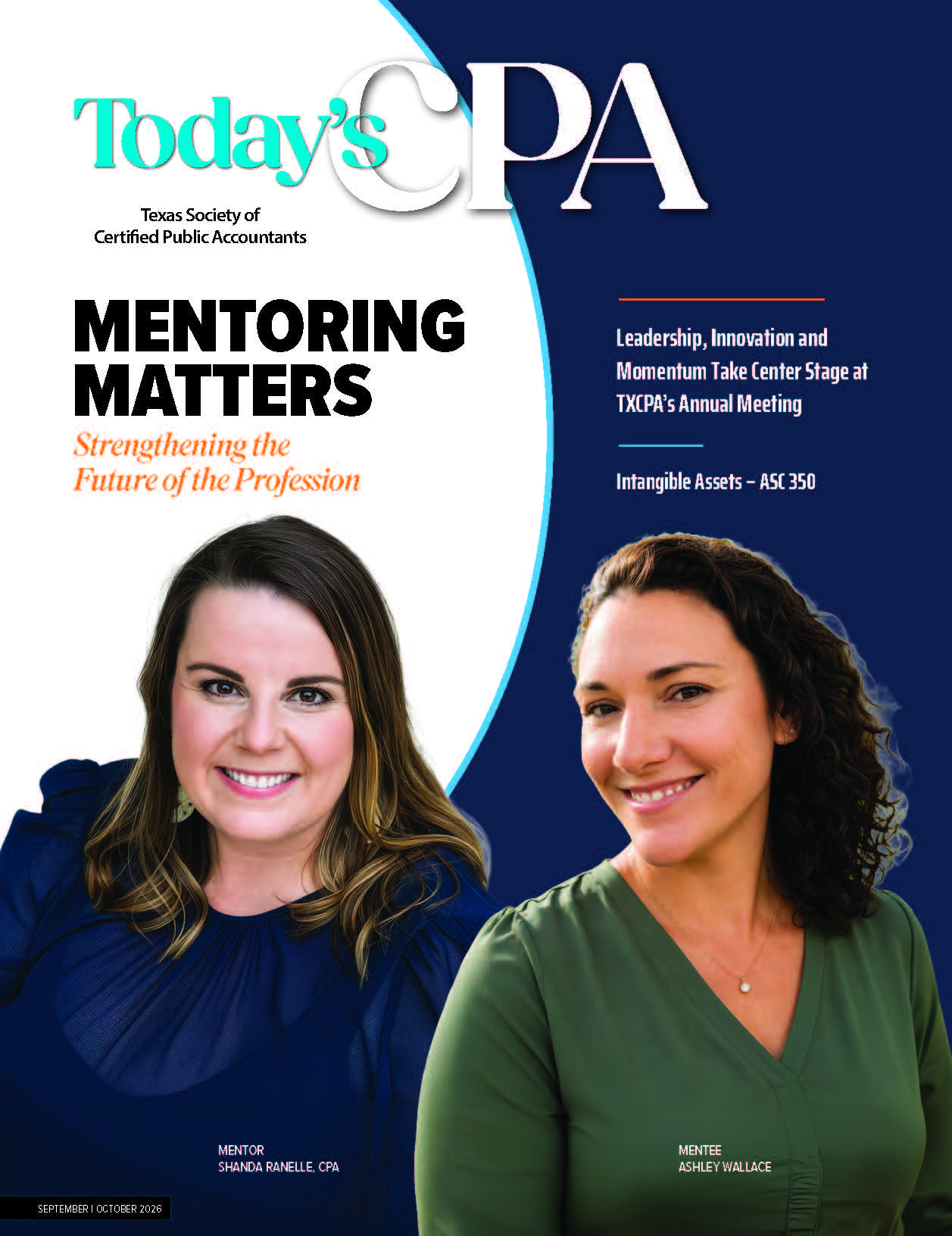
    Mentoring Matters: Strengthening the Future of the Profession

    Mentoring is a cornerstone of the accounting profession. From supporting students and CPA candidates to accelerating the growth of experienced professionals, mentoring strengthens confidence, preserves institutional knowledge and prepares future leaders. TXCPA's Mentor Match program is designed to help members build meaningful professional relationships that support their career growth and development.
    View Article
  • CPE: Intangible Assets – ASC 350

    FASB’s recent targeted GAAP improvements address the accounting and reporting of internally developed software. ASU 2025‑06 replaces development‑stage rules for internal‑use software with a “probable‑to‑complete” capitalization threshold.
    View Article
    IPR&D
  • volunteer leadership

    Leadership, Innovation and Momentum Take Center Stage at TXCPA's Annual Meeting

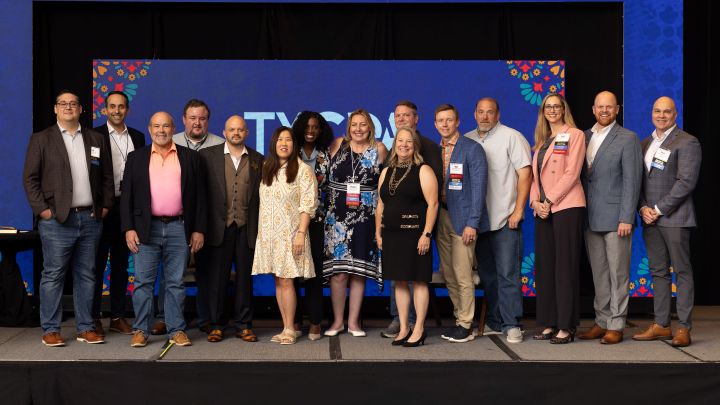
    TXCPA’s 2026 Annual Meeting brought more than 200 leaders together to celebrate organizational achievements, discuss emerging trends and shape the future of the organization. As the organization enters the final year of its Strategic Plan, the meeting emphasized momentum, collaboration and continued involvement in TXCPA and the accounting profession.
    View Article
  • Expanding the CPA Pipeline: An Important Joint Initiative for CPA Firms and K-12 Schools

    CPA firms, universities and professional organizations are using coordinated efforts to expand the future CPA talent pipeline by reaching students much earlier in the K‑12 system. Because many students choose career pathways as early as 8th grade, the authors emphasize shifting outreach toward freshmen and sophomores already inclined toward business studies.
    View Article
    TXCPA Accounting Opportunities Month
  • Workforce Development

    Mentorship, Momentum and the Future of the Profession

    Strong connections are essential to the future of the CPA profession. This CEO's Message highlights the power of mentorship, TXCPA’s efforts to strengthen the accounting pipeline, and the many ways members, volunteers and chapters are helping build opportunities for the next generation of CPAs.
    View Article
  • Outstanding Chapter Awards Recognize Achievements in Leadership and Service

    TXCPA’s Outstanding Chapter Awards recognize small and medium-sized chapters for excellence in leadership, member service, innovation and community involvement. The 2025-26 recipients, TXCPA Rio Grande Valley and TXCPA East Texas, were honored for their strong student outreach initiatives, professional development opportunities, scholarship fundraising, member engagement and community service.
    View Article
    volunteer leadership
  • Workforce Development

    Beyond Tax and Audit: Shedding Light on Alternative Career Pathways

    Accounting offers far more career opportunities than traditional tax, audit and financial reporting roles. By introducing students to the diverse ways accounting skills can be applied, educators and practitioners can help the next generation of CPAs see the many possibilities an accounting career can offer.
    View Article
  • What’s Happening Around Texas - September-October 2026

    TXCPA chapters across Texas are strengthening connections through student engagement events, legislative conversations, member appreciation gatherings, and strategic planning sessions. From Corpus Christi’s student bowling mixer and to Southeast Texas’ celebration with Lamar University to El Paso's and San Antonio’s focused planning meetings and Victoria’s community‑building event, each chapter is fostering momentum, collaboration and professional growth.
    View Article
    TXCPA Chapters
  • Tenure

    Is Accounting Academia Still a Good Career Option for CPAs? An Updated Perspective

    Is accounting academia still an attractive career path for CPAs? Although demand for accounting Ph.D. graduates has declined despite earlier predictions of faculty shortages, accounting professors continue to enjoy strong compensation, work/life balance, tenure stability and summer flexibility.
    View Article
  • Spotlight Article: Leading Beyond the Numbers

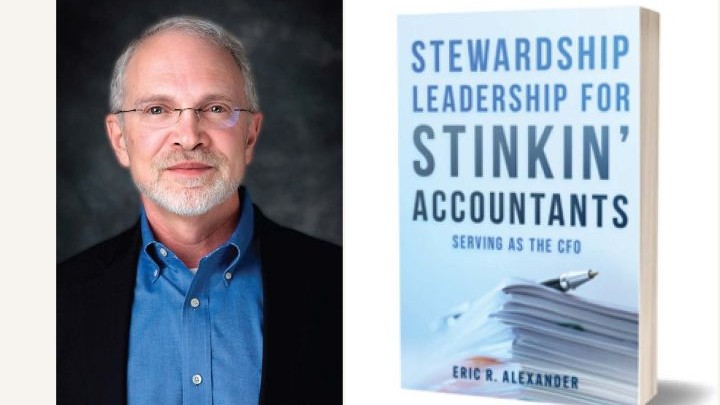
    Eric R. Alexander discusses the lessons behind his book “Stewardship Leadership for Stinkin' Accountants: Serving as the CFO” and how a servant mindset, wisdom and relationships create a lasting impact. He explores why trust, accountability and communication are essential to effective financial leadership, especially as AI transforms the profession.
    View Article
    Strategic Planning
  • Sustainability reporting

    Assessing Materiality of ESG Risks: Guidance for CPAs

    This article explains how CPAs can assess and disclose material environmental, social and governance (ESG) risks that may affect a company’s financial position, operations and stakeholders. The concept of double materiality is introduced, which considers both the financial impact of ESG risks on a company and the company’s impact on society and the environment.
    View Article
  • PCC Addresses Priority Private Company Issues in Q2

    This update summarizes the Private Company Council (PCC) activities for the second quarter of 2026. During its June meeting, the council prioritized improving financial disclosures for Employee Stock Ownership Plans (ESOPs) and targeted lease accounting simplifications for private companies, and discussed FASB's decision to add a project on subjective acceleration clauses and debt default disclosures.
    View Article
    Private Company Council
  • volunteer leadership

    Leading the Way: TXCPA Thanks Our 2026-2027 Faculty and Student Ambassadors

    TXCPA celebrates and thanks our 2026–2027 Faculty and Student Ambassadors, whose leadership and enthusiasm bring our programs, resources and opportunities directly to campuses across Texas. Their commitment strengthens our connection to future professionals and fuels the growth of the CPA pipeline statewide.
    View Article
  • Profitable Is Not the Same as Valuable

    A profitable business is not necessarily a valuable or transferable one, as enterprise value depends on organizational architecture rather than dependence on the owner’s involvement. The central message: profitable operations generate income, but only well‑structured businesses build equity that can be sold, transferred or relied upon for retirement.
    View Article
    valuation
  • Workforce Development

    A New Era for CPA Licensure in Texas – and a Look Ahead

    Texas has entered a new phase of CPA licensure with the implementation of Senate Bill 262 on August 1, 2026, creating an alternative pathway that allows candidates to qualify with 120 hours of education and two years of experience, alongside the traditional 150‑hour route. As the 2027 legislative session approaches, TXCPA is preparing to protect strong licensing standards, monitor deregulation efforts and engage newly elected lawmakers.
    View Article
  • Take Note

    In this edition of Take Note: A Legacy of Mentorship - A Tribute to John Baines, CPA-Dallas; Accountants Confidential Assistance Network (ACAN); CGMA® Designation; TXCPA Member Insurance
    View Article
    TXCPA Member Insurance
  • Virtual Accounting

    Classifieds

    The Classifieds section of Today's CPA provides a one-stop destination to find practices for sale, connect with buyers, and access services that support growth, transition and market expansion.
    View Article


CHAIR
Angela Ragan, CPA

PRESIDENT/CEO
Jodi Ann Ray, CAE, CCE, IOM

CHIEF OPERATING OFFICER
Melinda Bentley, CAE

EDITORIAL BOARD CHAIR
Derrick Bonyuet-Lee CPA, CGMA

MANAGER, MARKETING AND COMMUNICATIONS
Peggy Foley
pfoley@tx.cpa

MANAGING EDITOR
DeLynn Deakins
ddeakins@tx.cpa

CLASSIFIEDS
DeLynn Deakins
ddeakins@tx.cpa

Texas Society of CPAs
14131 Midway Rd., Suite 850
Addison, TX 75001
972-687-8550


EDITORIAL BOARD
Derrick Bonyuet-Lee, CPA-Austin;
Drew Chumley, CPA-Fort Worth;
Adam Dimmick, CPA-Houston;
Julia Frink, CPA-Fort Worth;
Baria Jaroudi, CPA-Houston;
Jeffrey Johanns, CPA-Austin;
Brian Johnson, CPA-Central Texas;
Michael Kraten, CPA-Houston;
Lucas LaChance, CPA-Dallas;
Shilpa Boggram Sathyamurthy, CPA-Houston.

CONTRIBUTORS
Melinda Bentley; Kenneth Besserman; Holly McCauley; Shicoyia Morgan; Craig Nauta; Triniti Patterson